Philosopher
A DIALOGUE BETWEEN THE PHILOSOPHICAL WRITINGS AND THE WORKS OF ART:
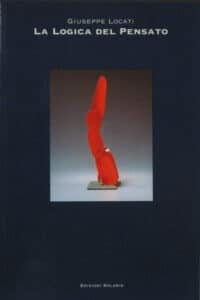
“In the “Logic of the Thought” I studied the word in its inner essentiality; I discovered its hermeneutic nature, which is not merely random but, on the contrary, precisely in its randomness reveals a Gaussian construction, with a graphic form like a Gauss bell curve, and therefore also an inner logic of its own.
Not only randomness, but also logic”.
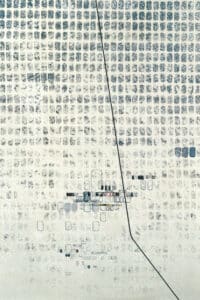
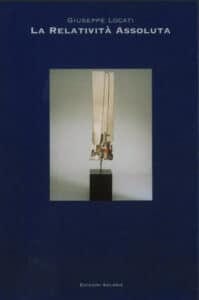
“In the thoughts that followed, developed around the more complete juxtaposition of several words — that is, in propositions — I discovered the absolute relativity of references. These are the mirror-like references illustrated in “Absolute Relativity”.
From a kind of knowledge that seemed to be heading toward a growing chaos, two “defining” elements emerged: first, the instability of the word, and second, the relativity of the traditional references and their mirror-like multiplication”.
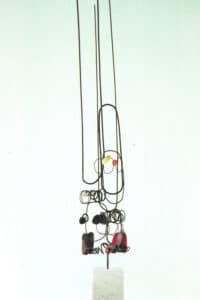
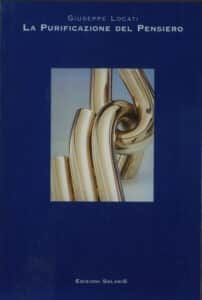
“In the analytical and comparative study of the Gaussian trace, seen as an element of randomness (in an inductive and statistical way) and seen as an element that carries randomness (in a deductive and scientific way), I derived in “The Purification of Thought” a system of two equations which, in a logical manner and with scientific rigour, led me to a satisfying solution.
There exists, therefore, within the hermeneutic word, the solution that is for now closest to an explanation of the link between matter and spirit, between human reality and the utopian reality of science, and thus also between thoughts and things”.
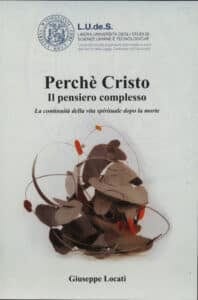
A vision this broad cannot but necessarily include his personal key to reading our reason for existing. This is what is set out in the volume “Why Christ…”, published by the Ludes University of Lugano.
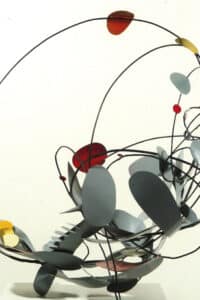
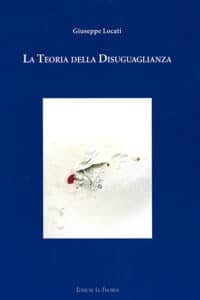
“I start from zero — that is, I start from the human being who, alone and immersed in nature, seeks to create his “own knowing”. He must identify what things have in common and which laws govern nature: the trees, the leaves, the blades of grass, the stones, the clouds, and so on…
Is there a law that governs their existence? Yes, there is, and it is very evident: it is the total absence of equalities”.
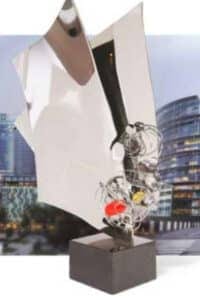
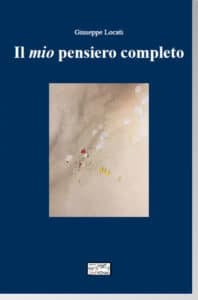
“This work is written with the precise aim of summarising, in a consequential way, the succession of all my previous texts. The journey, begun in the early 1970s, now definitively completes my personal response to a conviction I have always carried within me.
I have never ceased to consider myself a strange, unique bearer of two splendid realities: that of matter and that of spirit”.
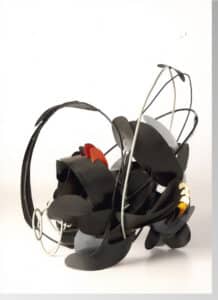
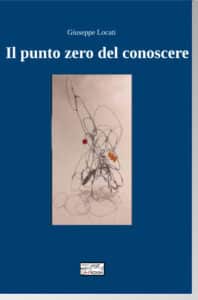
“In The Zero Point of Knowing I not only reaffirm the importance of logarithms for interpreting the things of the world, but I pinpoint the precise moment when — in prehistory — that human impulse was born to find coincidences and equalities between objects that, as we now know, are not equal at all…
My path has sought to point out a way toward clarifying our relationship with reality”.
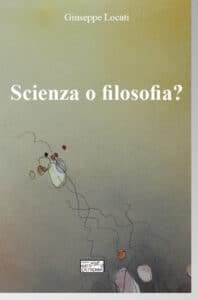
“According to Euclidean thought, these two disciplines appeared irreconcilable; philosophy was the realm of vague knowing and science the place of rigour…
There is no longer any reason to consider the two disciplines independent and autonomous. They are now both a common heritage, jointly managed, of a global knowing. It is the single, complete knowing”.
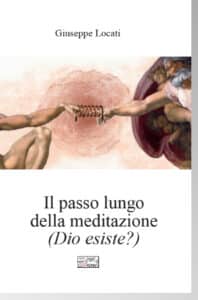
“An overwhelming vision of reality. Against a material atom, we now find an energetic quantum. Elementary entities in both cases, yet one of a material, concrete nature and the other of an abstract, wave-like nature. It almost seems a confrontation between matter and spirit…
It becomes evident that the two approaches set out above, the Euclidean and the energetic, are part of our single existence and therefore call for a single answer”.